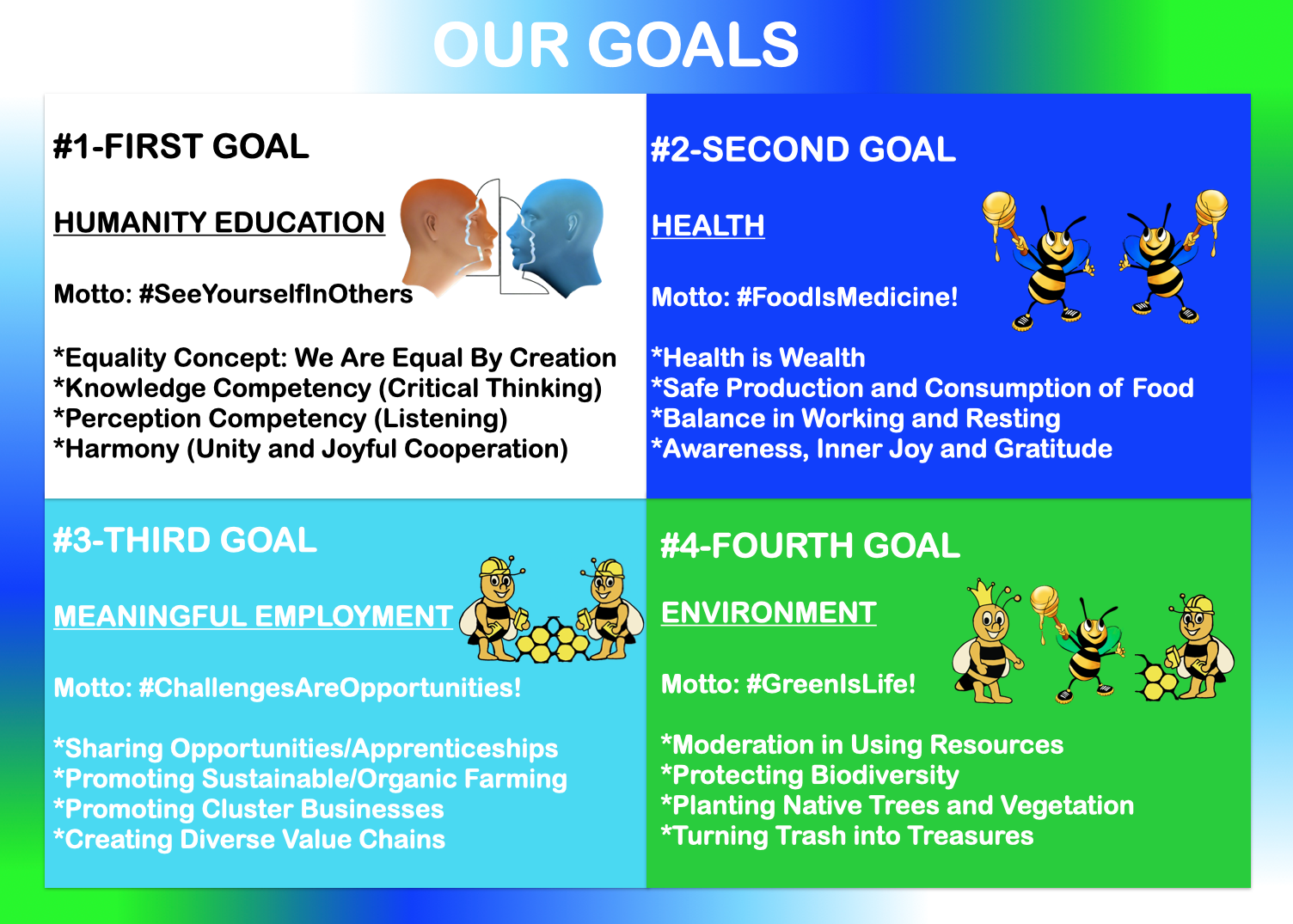
Tuko Sawa Harmony Generation is a values-led grassroots movement in Tanzania dedicated to restoring balance in how humanity understands itself and relates with the natural world.
Harmony Generation is the flagship public movement of the Tuko Sawa Society, a registered Tanzanian Community of Practice founded in 2020.
The movement was officially launched on 1 August 2025 at the home of Mwalimu Julius Nyerere in Butiama, Mara Region. This launch signalled the beginning of a living, national grassroots initiative to carry the Tuko Sawa philosophy into everyday life across Tanzania and beyond.
We promote a practical harmony framework that weaves together social wellbeing, ecological responsibility, Indigenous knowledge, and ethical leadership. Our work addresses the deep challenges of our time — social fragmentation, ecological decline, and moral disconnection — by restoring balanced relationships:
● Between people and communities
● Between knowledge and responsibility
● Between development and the living world
Harmony is not abstract theory. It is practised daily through relationships, responsibility, moderation, cooperation, and care. We bring these principles to life through harmony education,
community dialogue, youth engagement, ecological learning, Teaching Farm Centres, and consistent ethical practice
OUR VISION
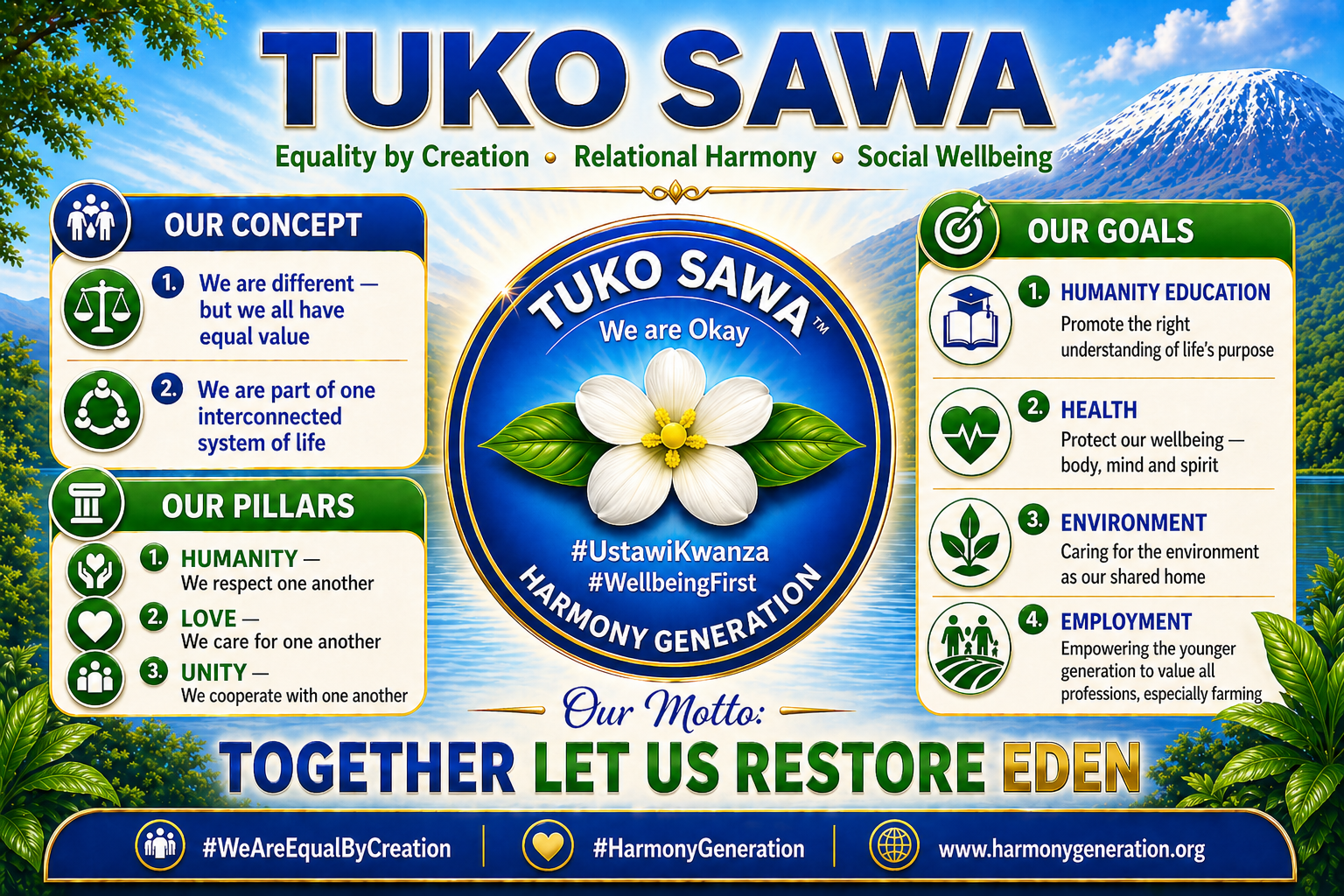
People, Communities and Nature thriving together.
We envision an Age of Harmony where:
● Every person is recognised as equal in dignity
● Communities flourish through cooperation and shared responsibility
● Education cultivates both moral clarity and practical wisdom
● Indigenous knowledge and contemporary understanding exist in creative balance
● Caring for the Earth is experienced as a shared joy and sacred duty
This vision is generational. It looks beyond short-term projects to the long, patient work of cultural and ecological restoration.
OUR MISSION
To strengthen inclusive wellbeing and community resilience through harmony education, ecological awareness, and ethical living.
We reconnect people with themselves, with one another, and with Nature through grassroots learning, intergenerational dialogue, and practical values-based action.
OUR CORE VALUES
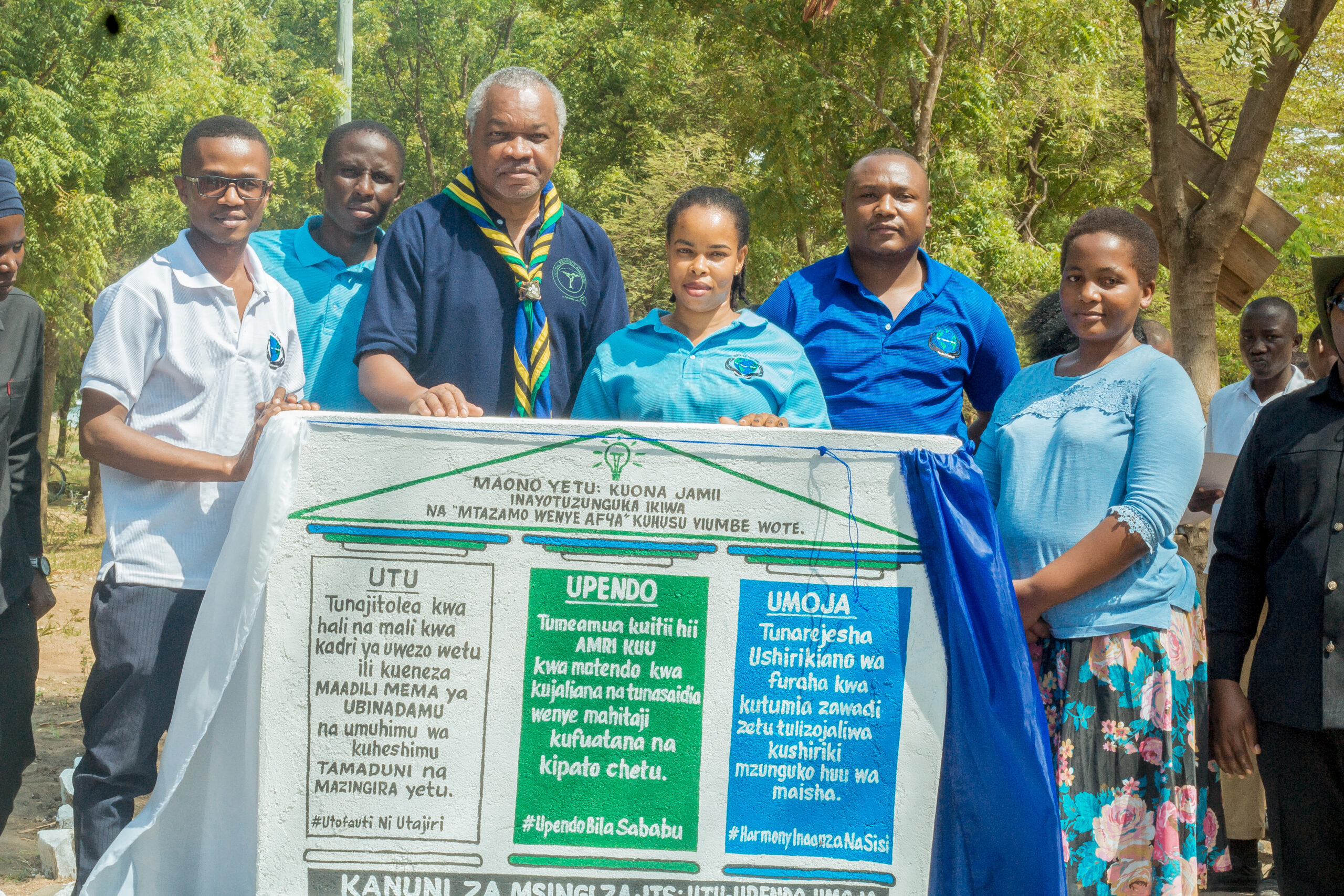
Humanity (Utu) – We affirm the equal dignity of all people and our responsibility to act with fairness, compassion, and respect for both humanity and Nature. #DiversityIsWealth
Love (Upendo) – Love is expressed through care, service, restraint, generosity, and the conscious choice not to harm. #LoveWithoutReasons
Unity (Umoja) – All life exists within relationships of interdependence. Diversity strengthens resilience, cooperation, and collective wellbeing. #HarmonyStartsWithMe
HOW WE LIVE OUR VALUES
We practise harmony as a daily discipline through:
● Advancing cooperation over division
● Teaching by lived example
● Strengthening relationships and communities
● Learning across generations
● Respecting and integrating Indigenous knowledge systems
● Promoting moderation, integrity, and ecological responsibility